
Lionfish in Crete
- Brian Jones
- Sep 19
- 4 min read

The Lionfish in Crete: A Beautiful Menace beneath the Waves
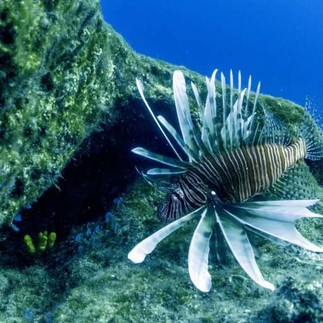
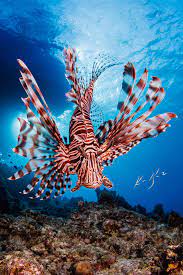
Imagine diving off the rocky shores of Crete: colourful reefs, schools of fish, the occasional octopus darting away, and… a lionfish. Its long, elegant fins spread wide, stripes glowing in the filtered light — beautiful, exotic, striking. But lurking behind that beauty is a growing concern for marine ecosystems, fisheries, and the ecological balance of Crete and the Eastern Mediterranean.

What is the Lionfish?
Scientific name: Pterois miles is the main species that has colonized the Mediterranean.
Native range: Indo-Pacific. It’s a tropical fish with distinctive venomous spines on its dorsal, pelvic, and anal fins.
How it behaves: It is an ambush predator. Eats small fish and crustaceans. Reproduces rapidly. Few or no predators in its invasive range.
How Did Lionfish Arrive in Crete / the Mediterranean?
Lessepsian migration: lionfish have migrated from the Red Sea through the Suez Canal. Warmer Mediterranean waters (increasing with climate change) facilitate their survival and spread.
Spread: Sightings date back several years in the Eastern Mediterranean (Turkey, Cyprus, Israel, Lebanon), and more recently they are established further west and around more Greek islands including Crete.

Why Are They Dangerous to Ecological Balance?
The lionfish present several overlapping threats:
Predation on native species
They eat juvenile fish and crustaceans, reducing recruitment (i.e. the number of young fish that survive to adulthood) of native species.
They compete with native predators for food and space.
Lack of natural predators
In their native habitat, they are kept in check by predators, disease, etc. In the Mediterranean, few species prey on them because of their venomous spines. This means their populations can grow quickly.
Exponential reproduction
Lionfish mature relatively quickly and females produce large numbers of eggs. Some estimates suggest up to ~2 million eggs per year in invasive settings.
Ecosystem cascading effects
When lionfish reduce populations of fish that eat algae (herbivorous fish), algae may overgrow reefs, smothering coral/rugose habitats and decreasing biodiversity.
Loss of native fish also means loss of species that are commercial or culturally important, which can affect fisheries and local economies.
Human health risk
Their spines are venomous: a sting can cause severe pain, swelling, infection, and in some cases more serious reactions. While fatalities are very rare, the risk is non-trivial, especially for divers, fishermen, or swimmers who accidentally touch them.
Economic and social impacts
Fishermen report damage to gear, loss of catches (because lionfish eat species they might otherwise catch).
Possible negative effects on diving tourism if reefs degrade, or if people are wary of stings.
Situation in Crete
Local fishermen and scientists are reporting increasing presence of lionfish around Crete.
With more frequent sightings come more problems: gear damage, unexpected catches, concern over biodiversity loss.
Also concern for swimmers / divers: stings have occurred. Although not common, incidents are reported.

What Is Being Done / What Can Be Done
Here are existing and proposed strategies:
Awareness campaigns
Educating fishermen, divers, tourists about what the fish look like, how to handle them safely.
Clarifying that although they are venomous via the spines, the flesh is edible and safe when prepared properly.
Control / removal efforts
Localised culls: divers or fishing cooperatives removing lionfish by spear, hand nets, hooks.Use of Marine Protected Areas (MPAs) as focal points for eradication efforts and monitoring.
Promoting consumption
Encouraging restaurants to include lionfish on menus, so there's an economic incentive to harvest them.
There is scepticism / cultural barriers, fear of venom, etc., that reduce consumer demand.
Regulation, monitoring, reporting
Better reporting systems (by divers, fishermen) for lionfish sightings.
Regulations that allow capturing them and selling them safely (handling spines, etc.), perhaps assigning resources to MPAs or marine research.
What More Could Be Done (or Needs to Be Done)
Larger coordinated efforts: Since lionfish don’t respect boundaries, Crete alone can’t solve the problem. Coordination across Greek islands and Mediterranean countries is vital.
Research: More data on population density, habitat preferences, reproduction in Cretan waters; which prey species are most impacted; whether any local species can adapt to predate on lionfish.
Develop markets: Making lionfish more mainstream as a food source might provide both ecological benefit and economic opportunities. But it must be done safely (proper removal of venomous parts) and accepted culturally.
Implement policies: For instance, regulating sale of lionfish, safety standards, supporting fishermen financially if their gear is damaged, possibly subsidies or incentives.
Public safety measures: Better signage in diving spots, training for first aid of marine stings, distributing information among swimming / diving communities.

Reflection: The Delicate Balance
Crete’s marine environments are rich: coral or rocky reefs, seagrass meadows, many endemic or commercially important species. The arrival and spread of lionfish threaten that richness. If neglected, loss of native species, reduced fish stocks, degraded reef habitats could result — with consequences not just for nature, but for people: fishermen, businesses based on tourism, coastal communities.
It’s a familiar pattern elsewhere: an invasive species slips in, proliferates where checks are weak, then causes cascading ecological harm — unless action is taken timely.
Conclusion
The lionfish in Crete and the broader Mediterranean is a clear example of an invasive species whose beauty masks its danger. It’s already making waves (literally) in ecological, economic, and social senses. But it’s not too late: through collective awareness, sensible regulation, coordinated removal efforts, and perhaps clever use of market demand, the worst effects might be mitigated.



Comments